RIOT Studio / Colchester community radio
Activ8 Radio
My biggest project to date.
A digital home for Colchester's new sound — live listening, programmes, people and community, brought together in one substantial station website.
- Client
- Activ8 Radio
- Location
- Colchester, Essex
- Project
- Website & listening platform
- Stage
- Launch / October 2026
01 / The station
A new sound for Colchester.
Some projects are about giving a business a better website. This one was about giving a new local radio station a digital home. Activ8 Radio is my biggest project to date: a substantial website and listening platform for a station rooted in Colchester, its music and its people.
The station brings together specialist music, presenters, interviews and community stories. Its ambition is bigger than a playlist. It is about making room for local voices, giving independent programmes somewhere to live and creating a place where listeners can discover the people behind the microphone.
The Gazette names Tim Morgan, Howard Gibson, Owen Louis and Mark Summers as its founders. In its launch report, the newspaper describes a volunteer-led project that grew out of an idea for podcasts about people in and around Colchester. Conversations about music and broadcasting developed into plans for a studio, a programme schedule and a community station.
That origin matters to the website. Activ8 needed to feel like a station with its own personality, not a corporate broadcasting template. The digital experience had to make the music easy to reach while showing that the local people, programmes and conversations are what make the station different.
02 / The brief
Much more than a brochure website.
A radio website serves several audiences at once. A first-time visitor wants to know what the station is and how to listen. A regular listener wants the schedule or a favourite presenter. Someone who missed a programme wants a recording. A local organisation wants to share a story, while a business may be looking for advertising or sponsorship information.
Behind those public pages, the station also needs ways to maintain its programme information and publish recordings. That makes this a different kind of build from a conventional small-business site: the website is both a public introduction and a practical part of the station's day-to-day digital presence.
The central design priority was to make those different journeys belong together. Listening should be prominent, the main sections should be recognisable, and visitors should be able to move between programmes, people and participation without feeling they have left the station's world.
03 / The visual experience
Unmistakably Activ8.
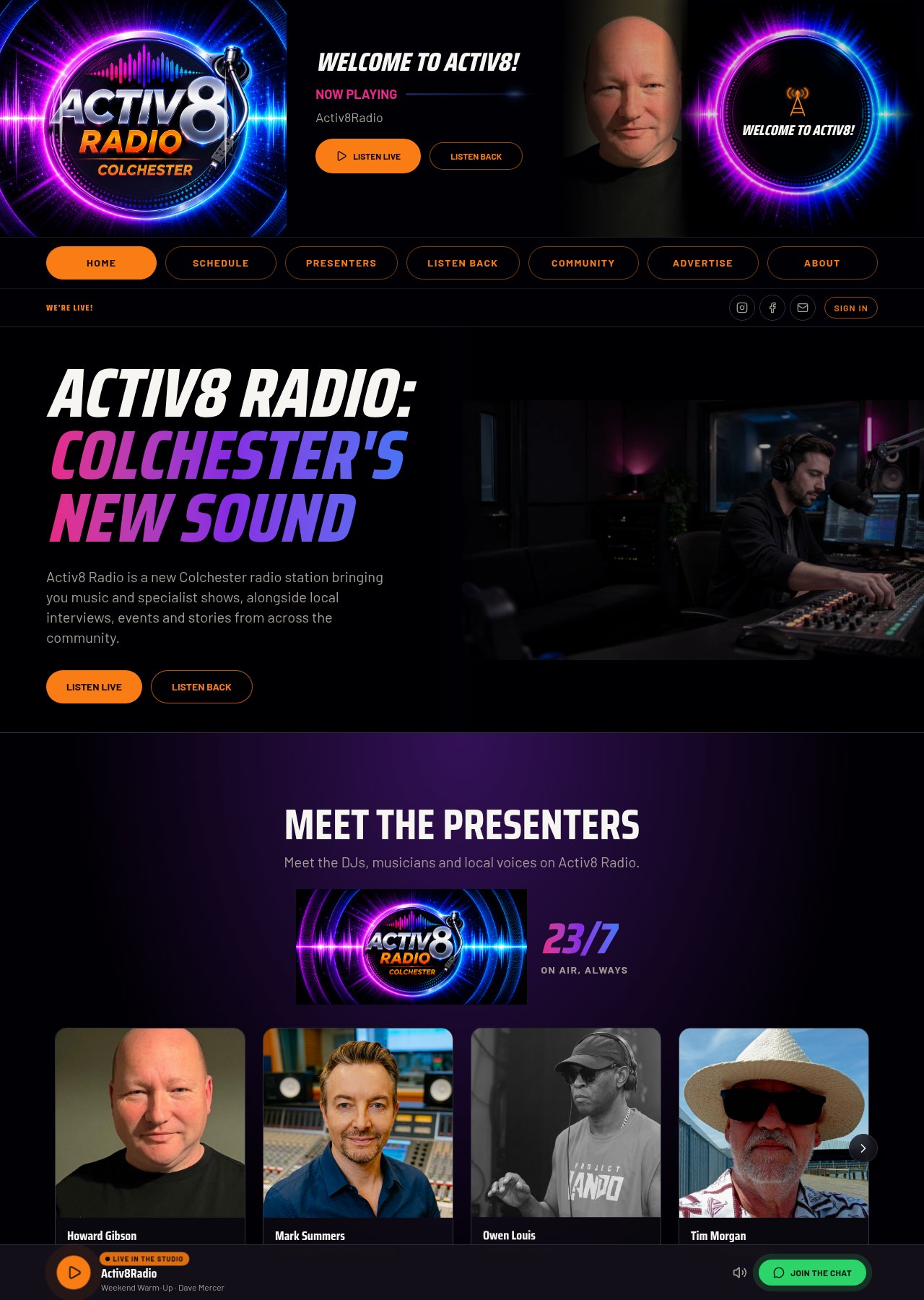
The website works with Activ8's existing visual personality: a dark backdrop, vivid colour, bold slanted headlines and its distinctive radio artwork. It is intentionally energetic. The aim is not to make a local music station look like a restrained corporate consultancy; it is to let the station's own character lead.
The large station header makes the brand an immediate first impression. Live-listening controls sit alongside the station identity, rather than being hidden at the bottom of a page. The main navigation brings Home, Schedule, Presenters, Listen Back, Community, Advertise and About into one recognisable structure.
Presenter photography gives the experience a human centre. The homepage introduces the team and their shows, while dedicated presenter pages create space for biographies and programme information. That turns a schedule from a list of time slots into a collection of people listeners can get to know.
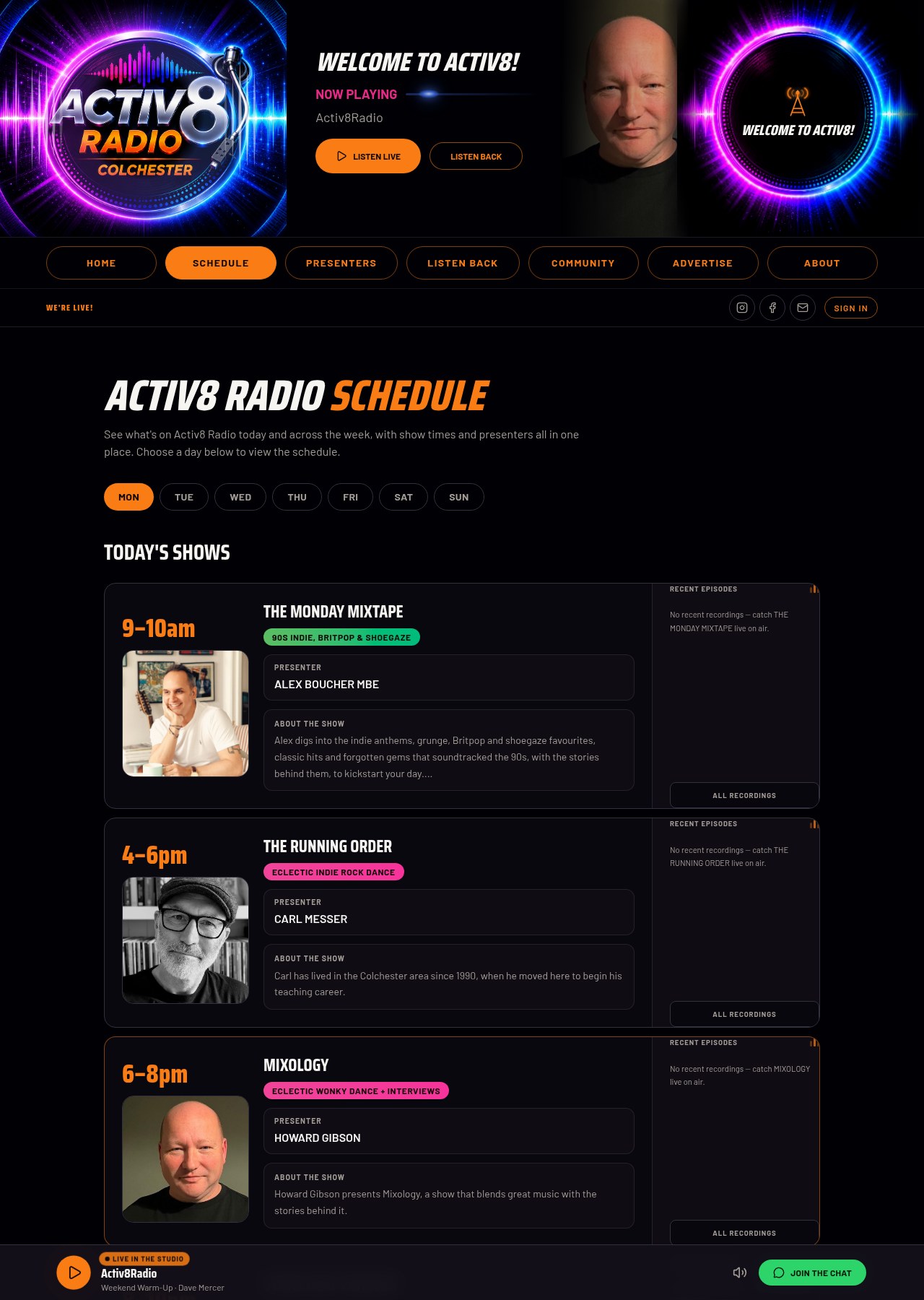
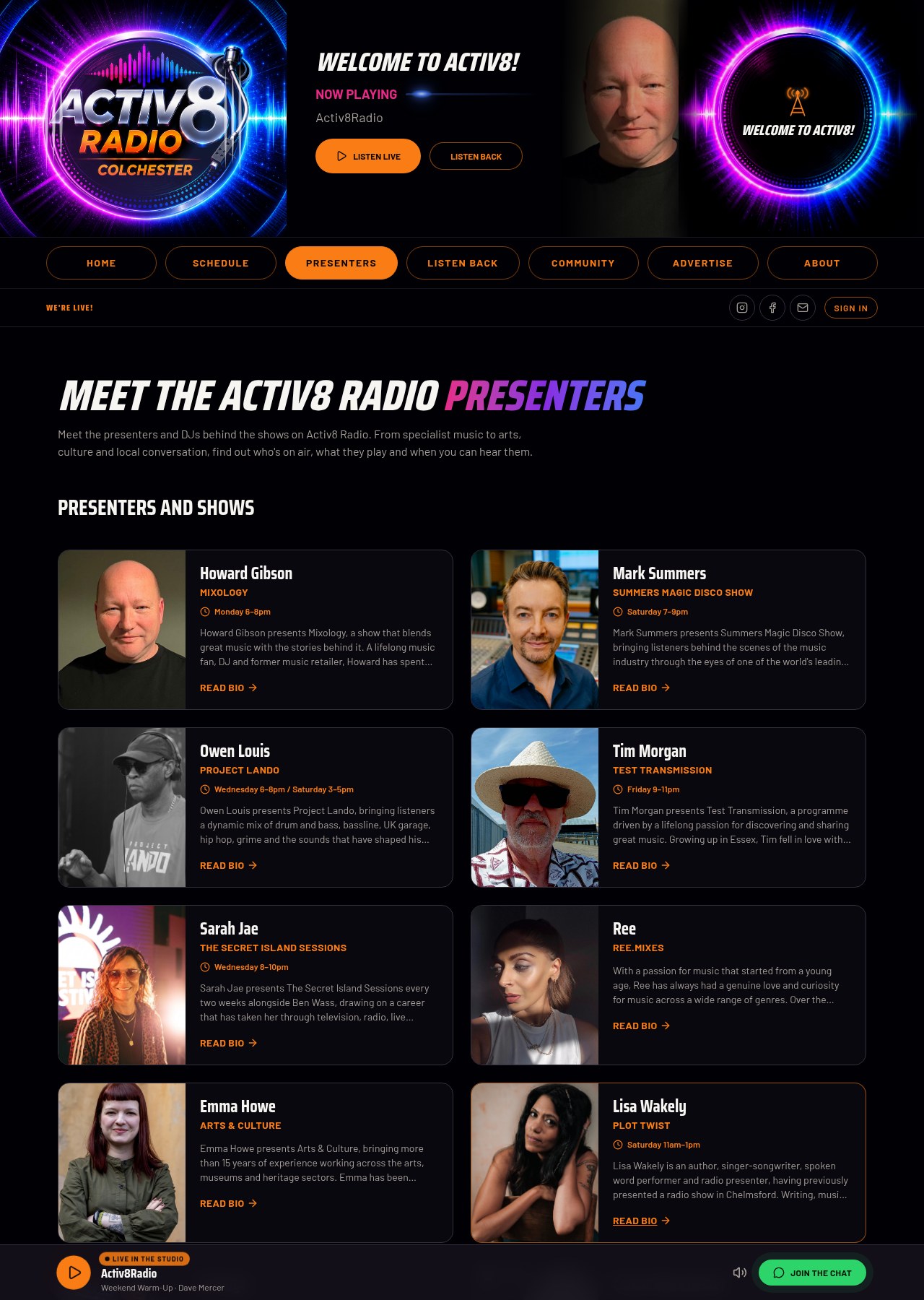
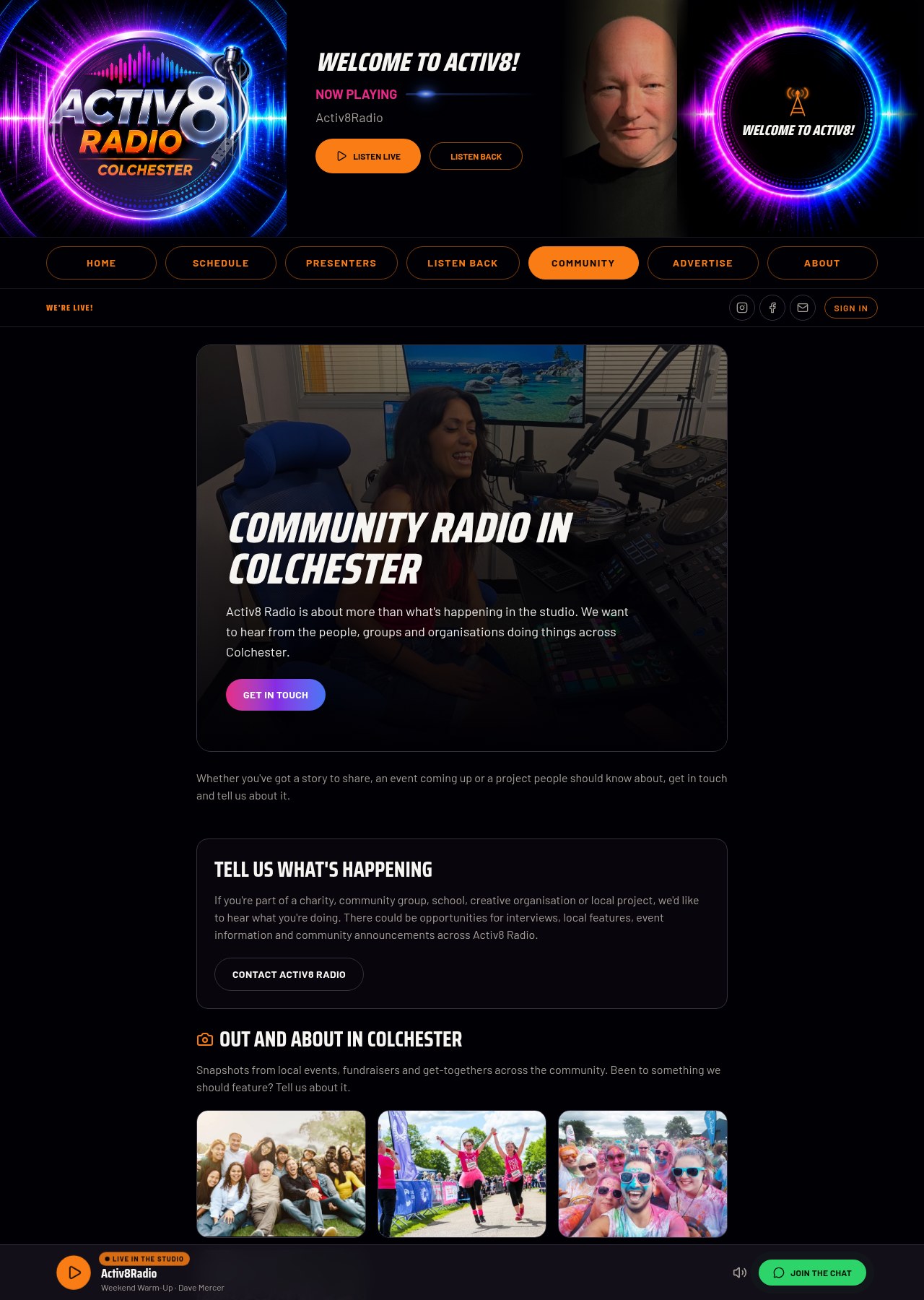
The screenshots here are genuine captures of the public website on 31 October 2026, not speculative mock-ups. They show the station's launch-era presentation, including its homepage, weekly schedule, presenter directory and community page.
04 / The listening experience
Built around the reason people visit.
The most important task on a radio website is also the simplest to describe: let people listen. The platform includes a browser-based live player connected to the station's stream, with a shared player interface that keeps the listening controls visible as visitors explore the site.
A live station also needs to explain what is happening around the audio. Programme names, presenter information and the schedule provide context. The listening experience is not treated as an isolated play button; it sits inside a wider set of pages that helps a listener decide what to tune in for and where to go next.
Listen Back adds another route into the station. The platform has an archive listing and individual episode pages, with playback for published recordings that have an audio file available. This gives programmes a home beyond their original broadcast slot and lets listeners return to content they missed.
This project covers the website and its web listening features. It is not a claim that RIOT built the station's broadcast infrastructure, a DAB service, a native mobile app or smart-speaker integrations. Those are separate from the website work shown here.
05 / Programme discovery
A schedule with people behind it.
The schedule page gives listeners a day-by-day view of the station's programming. Show times, programme names, genre information and presenter details sit together, so the page answers more than just 'what time is it on?'. It also helps visitors understand what a show is about and who is hosting it.
The captured Monday view includes The Monday Mixtape, The Running Order and Howard Gibson's MIXOLOGY. Elsewhere, the presenter directory introduces programmes such as Mark Summers's Summers Magic Disco Show and Owen Louis's Project Lando. The variety is part of the station's appeal, and the website gives that variety room to be seen.
The presenter directory extends the discovery journey with portraits, short introductions and routes to fuller biographies. For a new station, this is especially valuable: a visitor may not recognise a programme title yet, but they can connect with the person, the music or the story behind it.
06 / The people
Local voices, not anonymous playlists.
Community broadcasting depends on personality. The presenter pages make that visible, bringing the DJs, musicians and local voices out from behind the programme titles. The directory gives each person a recognisable place within the station rather than treating the team as a small afterthought on an About page.
This is also a useful connection between the visual and functional sides of the project. Presenter information supports the schedule, helps listeners choose programmes and gives individual shows a more memorable identity. Portraits and biographies communicate something an audio player alone cannot: who is inviting you to listen.
The station's own editorial content and contributor biographies remain its story to tell. The public site credits RIOT Colchester for the build and Ben Howard Communications for content. This case study respects that distinction rather than presenting every word, photograph or piece of station artwork as RIOT's original work.
07 / Participation
A station that invites people in.
Activ8's community page speaks directly to the people and organisations doing things across Colchester. It creates a clear invitation for charities, community groups, schools, creative organisations and local projects to get in touch about stories, events and possible features.
The platform also includes a song-request form and a community chat experience, with station-side controls for managing participation. These features give listeners ways to contribute rather than treating them only as an audience watching from the outside.
For local businesses, the advertising page introduces opportunities around advertising, sponsorship and event promotion. Its role is to open an enquiry, not to imply a self-service advertising marketplace. The website provides a place to start the conversation while the station develops its commercial offering.
08 / Behind the scenes
The part listeners do not see.
The scale of this project is not only in the public pages. The station has management screens for creating, editing and removing schedule entries, adding recordings, changing an episode's published status and maintaining its listen-back catalogue.
The recording workflow supports audio uploads and episode information, bringing the file and the programme details together. Published episodes can then appear in the listening archive. That gives the team a route from having a recording to making it discoverable on the website.
There are also community moderation and host-access controls. Those management tools are an important part of a participatory platform: an invitation to join in needs to sit alongside ways for the station to look after the space.
These are delivered platform capabilities, not statistics about their use. No listener totals, upload volumes, revenue figures or engagement increases have been supplied for this case study, and I have not invented any to make the launch story sound bigger.
09 / A RIOT milestone
My biggest project to date.
What makes Activ8 stand out in my portfolio is the breadth of the work. It brings together an expressive public website, live web listening, programme discovery, presenter profiles, on-demand recordings, audience participation and station management. Those parts need to work as one experience, not as a collection of unrelated pages.
It is also a genuinely local project. As a Colchester studio, being involved in the digital launch of a station built around the city means a lot. There is something especially satisfying about making a website for a project that creates space for local music, local stories and people who want to contribute to their community.
The result is a substantial digital home for Activ8 Radio, with room for listeners to explore and for the station team to develop its programming. This is a launch-stage case study: the achievement being documented is the delivered website and platform, not a retrospective claim about audience growth.
For me, it is a marker of what RIOT can take on. A strong website is not only about how it looks on the first screen. It is about understanding what people came to do, giving a team practical ways to keep it useful and making the whole experience feel like it belongs to the organisation behind it.
10 / In the Gazette
A local launch worth talking about.
The Colchester Gazette covered Activ8 Radio's launch in “Colchester community radio station Activ8 Radio to launch”. The report describes the volunteer-led station, its founders and plans to begin broadcasting at 9am on 31 October.
Its launch preview included Test Transmission, hosted by Tim Morgan and Mark Summers, planned live performances, specialist music programmes and opportunities for people to contribute ideas or volunteer behind the scenes. The coverage places the station in the city's wider community story — a new local project inviting people to take part.
The feature is about Activ8 Radio and its launch, not an endorsement of RIOT or a review of the website. Launch plans reported by the newspaper are not presented here as proof that every scheduled event took place.
Read the Gazette launch reportSources & credits
- Activ8 Radio's official website — station information and screenshots, checked 31 October 2026.
- Colchester Gazette — founders, station origins and reported launch plans.
- Website build: RIOT Colchester. Content credit on the station website: Ben Howard Communications. Station branding, photography and contributor material retain their respective credits.
- Project capabilities were checked against the delivered website and project source. No audience, sales or growth metrics are claimed.
Something bigger than a standard website?
Let's talk about the people it needs to serve, the things it needs to do and how to make it feel unmistakably yours.
Tell me about your project